
- English
- Español
- Português
- русский
- Français
- 日本語
- Deutsch
- tiếng Việt
- Italiano
- Nederlands
- ภาษาไทย
- Polski
- 한국어
- Svenska
- magyar
- Malay
- বাংলা ভাষার
- Dansk
- Suomi
- हिन्दी
- Pilipino
- Türkçe
- Gaeilge
- العربية
- Indonesia
- Norsk
- تمل
- český
- ελληνικά
- український
- Javanese
- فارسی
- தமிழ்
- తెలుగు
- नेपाली
- Burmese
- български
- ລາວ
- Latine
- Қазақша
- Euskal
- Azərbaycan
- Slovenský jazyk
- Македонски
- Lietuvos
- Eesti Keel
- Română
- Slovenski
- मराठी
- Srpski језик

Why Does the Right Laminating Machine Make Such a Big Difference in Print Finishing?
Article Summary
Choosing a laminating machine is not just about adding a glossy or matte surface. For many printing companies, packaging manufacturers, commercial print shops, and post-press teams, lamination directly affects productivity, material loss, finished appearance, delivery speed, and customer satisfaction. A poor machine choice can lead to bubbling, curling, silvering, weak bonding, paper waste, labor pressure, and repeated rework. A well-matched solution helps create stable output, improves the visual and protective performance of printed materials, and supports long-term business growth.
In this article, we explore the most common pain points buyers face when selecting a laminating machine, what features actually matter in daily production, how different machine types fit different workloads, and what practical standards should guide your investment decision. We also look at how a manufacturer such as Wenzhou Feihua Printing Machinery Co., Ltd. can support businesses looking for dependable laminating performance in real production environments.
Table of Contents
Article Outline
- Understanding the real production challenges behind lamination
- Identifying the machine functions that affect consistency and output
- Comparing manual, semi-automatic, and automatic solutions
- Reviewing key purchase factors before making a decision
- Explaining the commercial value of quality lamination
- Evaluating the importance of supplier experience and service
What Problems Are Buyers Really Trying to Solve
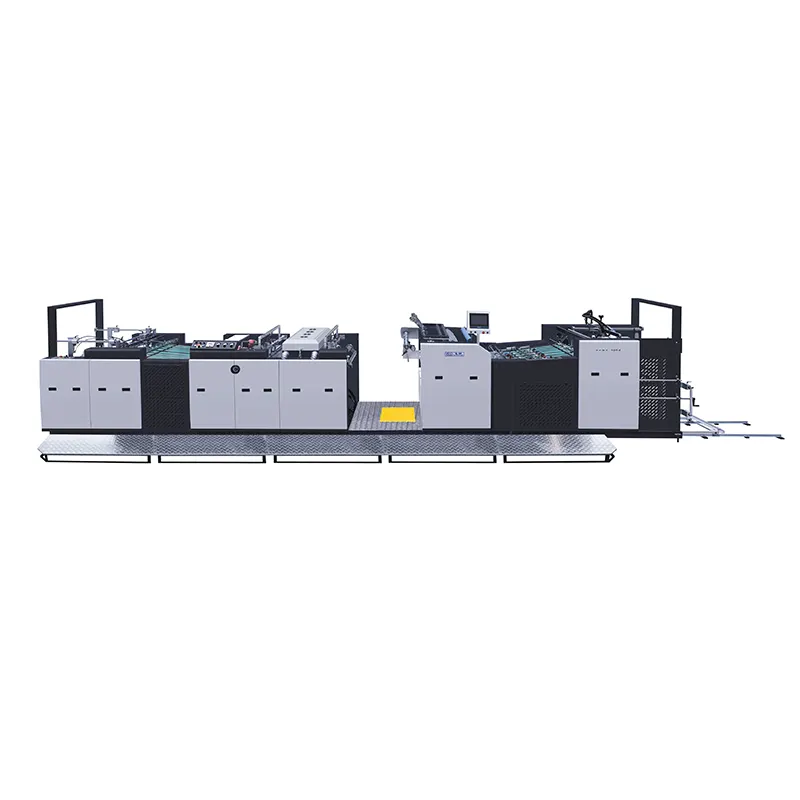
Most customers do not start searching for a laminating machine because they simply want a new piece of equipment. They start looking because something in production is slowing them down, damaging margins, or making finished products less competitive. In many cases, the issue is not lamination itself, but the lack of stable, repeatable, and efficient lamination.
One common frustration is inconsistent finish quality. Some printed sheets come out smooth and attractive, while others show wrinkles, air pockets, poor adhesion, or edge lifting. These defects may look minor at first glance, but they quickly become major problems when the final product is a premium brochure, a folding carton, a book cover, a label, or a retail package expected to look clean and professional.
Another challenge is material compatibility. Not every paper stock behaves the same way under pressure, heat, and adhesive interaction. Thin paper may curl. Dark paper may reveal silvering. High ink coverage may affect bonding. If the laminating machine cannot adapt well to different materials, operators spend too much time adjusting, testing, and compensating.
Labor efficiency is another serious pain point. In a busy shop floor environment, every additional manual step reduces throughput. Feeding sheets slowly, correcting alignment repeatedly, and dealing with cutting or separation issues all consume labor time that could be used elsewhere. Businesses that handle medium to high volumes often discover that an outdated laminating setup becomes a bottleneck for the whole finishing line.
There is also the issue of waste. Misfeeds, inaccurate pressure control, poor temperature balance, or unstable operation can ruin expensive printed sheets. When substrate cost, ink cost, finishing cost, and delivery commitments are all considered together, material waste becomes far more expensive than it appears on paper.
In other words, buyers are not only purchasing a laminating machine. They are trying to reduce defects, save labor, protect margins, and deliver a better product with fewer production risks.
Which Laminating Machine Features Matter Most
A good laminating machine should help operators achieve stable, efficient, and clean results without turning every production run into a trial-and-error exercise. That is why technical details matter, but only when they contribute to practical performance.
First, feeding accuracy matters. Smooth and precise sheet feeding improves alignment and reduces stoppages. This becomes especially important when handling longer runs or tighter finishing requirements. If the feeding system is unstable, the entire process becomes harder to control.
Second, temperature and pressure consistency are essential. Lamination quality depends heavily on balanced heat transfer and even pressure across the sheet surface. Uneven conditions can cause weak adhesion, bubbles, warping, or visual defects. A reliable machine should help maintain process stability rather than forcing operators to constantly correct it.
Third, production speed should match actual business needs. Faster is not always better if quality falls or changeover becomes difficult. The more useful question is whether the machine can maintain good results at a speed suitable for your order structure. A shop doing frequent short runs may value flexibility and quick adjustment more than top-speed numbers alone, while a packaging plant with repeat jobs may prioritize continuous high-output operation.
Fourth, ease of operation has direct business value. A machine that is easier to learn, adjust, clean, and maintain reduces training pressure and helps operators work with more confidence. Over time, user-friendly design can contribute just as much to productivity as raw machine capacity.
Fifth, the ability to handle different finishes and applications is important for growing businesses. Matte lamination, gloss lamination, specialty textures, and material variation all place different demands on the equipment. A flexible laminating machine gives a company more room to respond to changing customer requests.
| Feature | Why It Matters | Business Impact |
|---|---|---|
| Stable sheet feeding | Improves alignment and reduces misfeeds | Less downtime and less waste |
| Consistent heat and pressure | Supports strong and even lamination | Better finish quality and fewer defects |
| Suitable operating speed | Matches production demand without sacrificing control | Higher throughput with better reliability |
| Easy adjustment and operation | Reduces setup complexity | Lower training burden and faster job changeover |
| Material adaptability | Handles different papers and film requirements | Wider service range and stronger competitiveness |
How Do Different Laminating Machine Types Compare
Not every buyer needs the same machine structure. The right choice depends on production volume, available labor, floor space, budget, product type, and finishing expectations.
Manual laminating machines are often suitable for smaller operations, training use, sample making, or businesses with limited output requirements. They can be a practical entry point, but they usually require more operator involvement and may not be ideal for businesses trying to scale.
Semi-automatic laminating machines often provide a balance between cost and efficiency. They are commonly chosen by print shops that want better output and more stability without immediately stepping into a fully automated configuration. For many mid-sized businesses, this can be a sensible transition stage.
Automatic laminating machines are usually preferred when production volume is higher and consistent efficiency is critical. These machines are better suited for operations that value labor savings, higher output, and greater process standardization. For businesses handling frequent commercial or packaging jobs, automation can significantly improve workflow continuity.
| Machine Type | Best For | Main Advantage | Main Consideration |
|---|---|---|---|
| Manual Laminating Machine | Small orders, samples, basic finishing tasks | Lower entry cost | More manual work and lower output |
| Semi-automatic Laminating Machine | Growing print shops and medium workloads | Balanced efficiency and investment | Still requires some operator involvement |
| Automatic Laminating Machine | High-volume and efficiency-focused operations | Higher productivity and better workflow continuity | Needs a larger investment and clearer production planning |
What Should You Check Before Buying
A laminating machine should be selected according to real production conditions, not just a catalog description. Before making a purchase, buyers should evaluate their own workflow carefully.
- What types of printed products do you laminate most often
- What substrates and thickness ranges do you need to handle
- What is your daily or monthly output volume
- How much labor do you want to commit to the process
- Do you need room to expand into higher-volume work later
- How important are delivery lead time and after-sales support
It is also wise to ask practical questions about maintenance, spare parts availability, operator training, and configuration matching. The machine itself is only part of the decision. What matters just as much is whether the supplier understands the production reality behind your order types.
Buyers often regret focusing only on initial price. A lower purchase price can become expensive if the machine creates frequent downtime, quality complaints, or unnecessary waste. A more suitable laminating machine often pays back its value through smoother production, stronger finish quality, and fewer avoidable losses.
How Does Lamination Improve Product Value
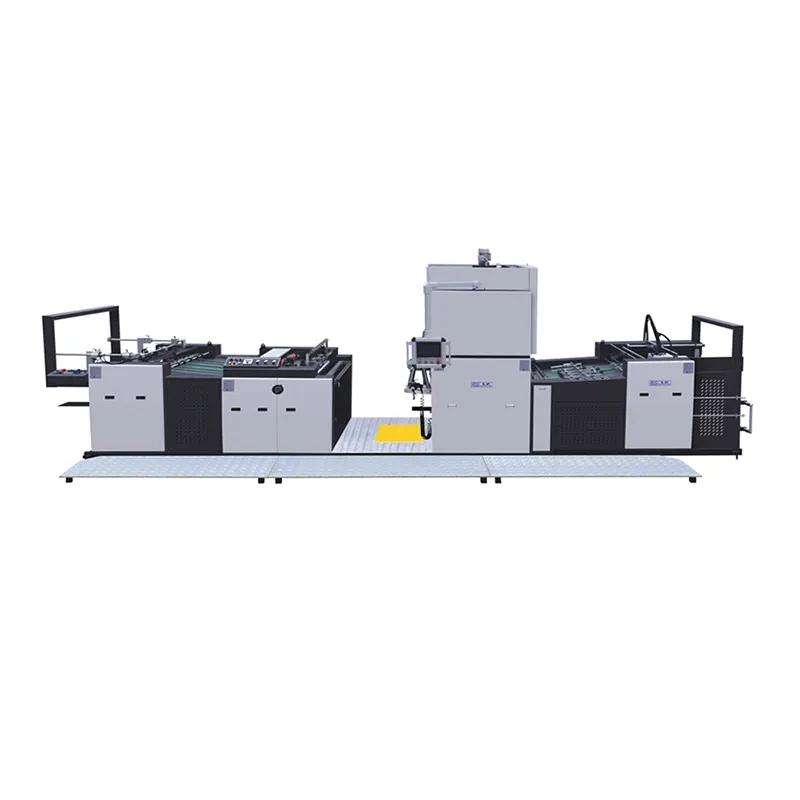
Lamination is not simply a protective layer. It also changes how a printed product is perceived in the market. A well-laminated surface can improve tactile quality, visual sharpness, durability, and the overall impression of value.
For packaging, lamination can help protect graphics from abrasion, moisture, dirt, and routine handling. For commercial printing, it can make brochures, covers, menus, and promotional materials feel more refined and durable. For brand-facing materials, surface finish can shape first impressions in a way that directly affects customer trust.
Matte and gloss finishes each play different roles. Gloss often supports stronger visual brightness and color lift, while matte can create a calmer, more premium look. The right laminating machine allows businesses to produce these effects more consistently and with better control.
When output quality becomes reliable, businesses can take on more demanding orders with greater confidence. That confidence has commercial value. It helps protect reputation, support repeat business, and improve the perceived standard of the finished product.
Why Does the Manufacturing Partner Matter
Even a capable laminating machine delivers better results when it comes from a manufacturer that understands post-press production challenges. Machine design, technical support, responsiveness, and product range all influence the buying experience and the long-term reliability of the investment.
This is where experience becomes meaningful. A company such as Wenzhou Feihua Printing Machinery Co., Ltd. is not only associated with laminating machine manufacturing, but also with broader knowledge of print finishing demands, model variation, and customer application needs. For buyers, that matters because the right supplier should do more than provide a machine name and a quotation. The supplier should help match the configuration to actual use conditions.
A dependable partner can also support businesses as their production changes. A customer may begin with a moderate laminating requirement and later move toward larger packaging runs, tighter finishing standards, or more diversified product types. Working with a manufacturer that understands these shifts can make equipment planning more practical and less risky.
In a competitive market, the best equipment choice is rarely the one that only looks good on paper. It is the one that fits your workload, supports your operators, protects your material value, and helps your finished products leave a stronger impression.
FAQ
Is a laminating machine necessary for all printed products?
No. Some printed materials do not require lamination. However, when products need better surface protection, stronger visual presentation, or improved durability, a laminating machine becomes an important finishing solution.
How do I know whether I need a manual, semi-automatic, or automatic laminating machine?
The answer depends on your production volume, labor structure, budget, and finishing goals. Small and occasional jobs may be handled by manual equipment, while growing or high-volume businesses usually benefit more from semi-automatic or automatic solutions.
What causes defects such as bubbles or curling after lamination?
These issues can result from several factors, including unstable temperature, incorrect pressure, unsuitable materials, operator error, or machine mismatch with the application. A properly selected laminating machine helps reduce these risks by offering better process stability.
Can one laminating machine handle different paper types and finish styles?
Many machines can support multiple applications, but actual performance depends on the machine design and configuration. It is important to confirm substrate range, film compatibility, and operational flexibility before buying.
What should I prioritize if I want long-term value from my investment?
Focus on reliability, consistency, ease of operation, supplier support, and fit for your real production needs. A laminating machine that works well in daily use is more valuable than one that only looks attractive at the quotation stage.
Looking for a Laminating Machine That Truly Fits Your Production Needs?
If you are planning to improve finishing quality, reduce waste, and increase production efficiency, now is the right time to choose a laminating solution that matches your real business goals. Wenzhou Feihua Printing Machinery Co., Ltd. is ready to help you explore practical options for different applications and output levels. If you want a machine that supports smoother operation and stronger finished products, contact us today and start the conversation with a team that understands what modern print finishing demands.