
- English
- Español
- Português
- русский
- Français
- 日本語
- Deutsch
- tiếng Việt
- Italiano
- Nederlands
- ภาษาไทย
- Polski
- 한국어
- Svenska
- magyar
- Malay
- বাংলা ভাষার
- Dansk
- Suomi
- हिन्दी
- Pilipino
- Türkçe
- Gaeilge
- العربية
- Indonesia
- Norsk
- تمل
- český
- ελληνικά
- український
- Javanese
- فارسی
- தமிழ்
- తెలుగు
- नेपाली
- Burmese
- български
- ລາວ
- Latine
- Қазақша
- Euskal
- Azərbaycan
- Slovenský jazyk
- Македонски
- Lietuvos
- Eesti Keel
- Română
- Slovenski
- मराठी
- Srpski језик

How Can a Die Cutting Machine Improve Packaging Quality and Production Efficiency?
When buyers compare finishing equipment, they are rarely looking for a machine alone. They are looking for cleaner cuts, faster turnaround, fewer operator headaches, lower waste, and more confidence when large orders arrive all at once. That is exactly why the right Die Cutting Machine matters so much. In my view, the best investment is not simply the fastest model on paper, but the one that fits real production pressure. At Wenzhou Feihua Printing Machinery Co., Ltd., this understanding is especially important because packaging producers, print houses, and converting businesses all face the same question: how do we raise output without sacrificing precision?
What Does This Article Cover
This article explains how a Die Cutting Machine helps solve the everyday pain points faced by packaging and printing manufacturers. I discuss what the machine does, where it creates value, how to choose the right configuration, what features truly affect quality, and which maintenance habits reduce downtime. I also include a practical outline, a jump-link table of contents, comparison tables, and FAQs so decision-makers can evaluate equipment with more clarity and less guesswork.
What Will You Find in This Article
- What Is the Outline of This Guide
- What Problems Does a Die Cutting Machine Actually Solve
- Which Industries Benefit Most from a Die Cutting Machine
- What Features Should Buyers Compare Before Choosing
- How Can the Right Machine Reduce Waste and Rework
- Which Type of Die Cutting Machine Fits Different Production Goals
- What Should You Ask a Supplier Before You Buy
- How Can Daily Maintenance Protect Output Stability
- What Questions Do Buyers Ask Most Often
- How Should You Take the Next Step
What Is the Outline of This Guide
- I start with the core production problems that push companies to upgrade finishing equipment.
- I then explain where a Die Cutting Machine creates the most value in commercial packaging and print workflows.
- Next, I compare critical buying factors such as pressure stability, registration accuracy, feeding reliability, speed, and service support.
- After that, I show how the right machine lowers scrap, reduces operator dependence, and supports more consistent delivery.
- Finally, I cover supplier evaluation, maintenance priorities, and the most common buyer questions.
What Problems Does a Die Cutting Machine Actually Solve
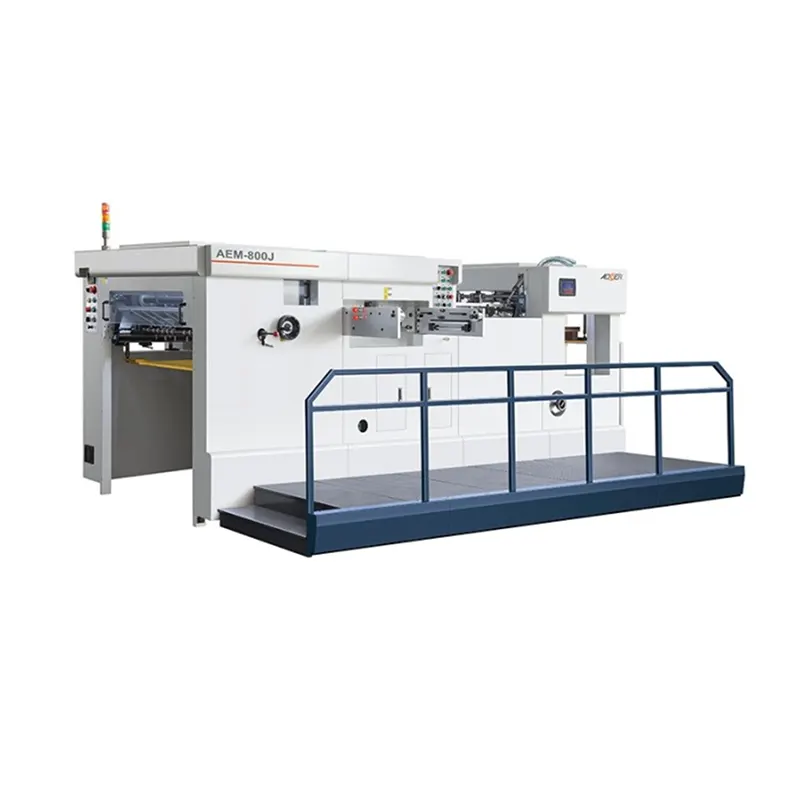
Many factories do not upgrade because they love new equipment. They upgrade because old production methods start becoming expensive in quiet, annoying ways. Maybe edges are not as clean as customers expect. Maybe repeat orders become difficult because manual consistency varies by shift. Maybe short runs eat too much labor, while long runs expose limits in feeding stability and registration accuracy.
A well-matched Die Cutting Machine addresses these issues by turning shape conversion into a more controlled, repeatable process. Instead of relying heavily on operator adjustment from batch to batch, the machine gives production managers something much more useful: predictability. That matters whether you are producing folding cartons, labels, display pieces, inserts, or decorative packaging elements.
From my perspective, buyers usually care about five pain points most:
- Inconsistent cut quality across long production runs
- Slow setup that hurts delivery schedules
- Material waste caused by poor registration or unstable feeding
- Difficulty handling different substrates and job types
- Unexpected downtime that disrupts customer commitments
| Common Production Problem | How the Right Machine Helps | Why It Matters to Buyers |
|---|---|---|
| Uneven cutting pressure | Provides more stable cutting force and cleaner forming results | Improves appearance and reduces rejected products |
| Manual alignment errors | Supports more accurate registration and repeatability | Protects brand presentation on finished packaging |
| Slow job changeovers | Shortens preparation time for varied production orders | Helps factories take more jobs without chaos |
| Material waste | Reduces misfeeds, rework, and badly cut sheets | Lowers production cost per usable piece |
| Operator fatigue | Improves workflow consistency and lowers dependency on manual correction | Makes production easier to manage across shifts |
Which Industries Benefit Most from a Die Cutting Machine
It is easy to assume that only large carton manufacturers need this kind of equipment, but that is far too narrow. In practice, a Die Cutting Machine can be valuable wherever shape precision, creasing quality, and repeatable finishing are important.
I would usually expect the following businesses to benefit the most:
- Folding carton manufacturers serving cosmetics, food, pharmaceuticals, and retail packaging
- Commercial printers expanding into higher-margin finishing services
- Label and paper product converters handling custom shapes
- Gift box and premium packaging producers requiring visual consistency
- Corrugated packaging plants aiming to improve output on value-added jobs
The real question is not whether the machine can cut a material. The real question is whether it can do so at the speed, cleanliness, and stability your customers expect. That distinction is where many buying mistakes begin.
What Features Should Buyers Compare Before Choosing
When I review equipment options, I do not start with top speed alone. Speed without control is just a faster way to create scrap. Instead, I look at the machine as a system. Feeding, pressure, registration, waste removal, operator interface, and support all affect the final result.
Here are the points I would compare carefully before making a decision:
- Feeding reliability because inconsistent sheet delivery destroys output rhythm
- Pressure consistency because sharp, uniform cutting depends on it
- Registration accuracy because packaging graphics leave very little room for visible error
- Material compatibility because some jobs involve paperboard, corrugated sheet, laminated stock, or specialty substrates
- Waste stripping efficiency because waste removal quality affects downstream labor and appearance
- Setup friendliness because complicated machines consume time in ways brochures rarely mention
- After-sales responsiveness because support becomes important the moment production pressure rises
| Feature | What to Check | Why It Should Not Be Overlooked |
|---|---|---|
| Feeding system | Sheet stability, jam frequency, smooth delivery | A machine is only productive when feeding remains reliable |
| Cutting precision | Accuracy under continuous operation | Sample quality means little if long-run consistency fails |
| Operational controls | Ease of adjustment, display clarity, training curve | Simple control reduces operator error and setup time |
| Build quality | Frame stability, component durability, finishing | Mechanical confidence often predicts service life |
| Technical support | Documentation, spare parts access, troubleshooting speed | Fast support protects shipment schedules and customer trust |
If I had to give one blunt piece of advice, it would be this: never buy a Die Cutting Machine based on one impressive demonstration alone. Ask how it behaves after months of daily production, with different operators, varying materials, and real commercial deadlines.
How Can the Right Machine Reduce Waste and Rework
Waste is not always dramatic. Sometimes it appears as slightly off-center creasing, edges that fuzz more than they should, or batches that pass visual inspection only to create assembly trouble later. Those hidden losses are exactly why the finishing stage deserves more attention than it usually gets.
A capable Die Cutting Machine reduces waste in several ways. First, it helps maintain cutting consistency from sheet to sheet. Second, it improves registration, which protects both structure and appearance. Third, it lowers the number of jobs that need manual correction before shipment.
This leads to benefits buyers feel immediately:
- Lower raw material loss
- More stable downstream folding and gluing performance
- Better product presentation for branded packaging
- Less labor spent sorting questionable pieces
- More confidence when taking on premium or urgent orders
For factories trying to move from price competition toward value competition, that shift matters a lot. Cleaner output is not just a technical result. It changes the kind of customers you can serve.
Which Type of Die Cutting Machine Fits Different Production Goals
Not every company needs the same solution. Some buyers need a more automated setup for volume and speed. Others care more about flexibility, manageable investment, and compatibility with mixed-order production. The best choice depends on how your orders actually look week after week.
| Production Goal | Suitable Direction | Typical Buyer Priority |
|---|---|---|
| High-volume standardized jobs | Higher automation and faster sheet handling | Speed, repeatability, less manual intervention |
| Mixed custom orders | Flexible setup with easier adjustment | Adaptability and shorter changeover times |
| Premium packaging | Precision-focused configuration | Appearance, crease quality, structural consistency |
| Growing small-to-mid factory | Balanced performance and serviceability | Reliable output without overbuying capacity |
This is where supplier conversations become very revealing. A good manufacturer does not push the same answer onto every buyer. Instead, they ask what materials you run, how often your jobs change, what your actual bottlenecks are, and which problems are costing you money right now. That kind of discussion is much more useful than generic promises.
In my experience, buyers appreciate a supplier that understands business logic, not just machine logic. Wenzhou Feihua Printing Machinery Co., Ltd. should therefore be introduced not as a name placed into an article for decoration, but as a company expected to answer practical production questions in a serious way.
What Should You Ask a Supplier Before You Buy
Before confirming any order, I would ask direct questions. Not polite brochure questions. Real questions. The kind that reveal whether the supplier understands what happens after the machine lands on your floor.
- What materials and thickness ranges can this machine handle in daily production?
- How does the machine perform during long continuous runs?
- How fast is typical setup for repeat jobs and for new jobs?
- What operator training is needed before stable output can be expected?
- Which components require regular replacement or preventive attention?
- What is the process for remote support and spare parts supply?
- Can the supplier provide practical advice based on your current workflow rather than only machine specifications?
These questions matter because the wrong machine rarely fails in the showroom. It fails in production reality. It fails when your team is rushing. It fails when the material is slightly different. It fails when your customer deadline leaves no room for improvisation.
How Can Daily Maintenance Protect Output Stability
Even an excellent Die Cutting Machine will not stay excellent without care. Maintenance does not need to be dramatic or difficult, but it does need to be consistent. Too many factories treat maintenance as something to remember after performance starts slipping. By then, losses have already begun.
I prefer a simple maintenance mindset built around routine discipline:
- Inspect feeding and delivery areas daily
- Keep cutting sections clean and free from debris buildup
- Check wear-prone components before they affect cut quality
- Monitor unusual noise, vibration, or pressure inconsistency
- Record recurring issues instead of solving them only in the moment
That last point matters more than people think. A short written maintenance record often helps identify patterns early. Maybe a material type triggers more adjustment than expected. Maybe one station needs attention more often than others. Maybe an operator workflow is causing avoidable stoppages. Once you see the pattern, improvement becomes much easier.
A machine purchase should strengthen your process, not complicate it. Reliability grows from both mechanical quality and disciplined daily use.
What Questions Do Buyers Ask Most Often
What is the main advantage of investing in a Die Cutting Machine instead of relying more on manual finishing?
The biggest advantage is consistency. Manual methods may work for limited jobs, but stable volume production requires repeatable quality, better efficiency, and lower waste.
Which buyers benefit most from a Die Cutting Machine upgrade?
Packaging manufacturers, commercial printers, carton producers, converters, and companies expanding into higher-value finishing work usually benefit the most.
What matters more, speed or precision?
Precision should come first. Speed only creates value when the output remains stable and sellable. Fast waste is still waste.
How can I judge whether a supplier is reliable?
Ask practical questions about materials, service response, training, spare parts, and long-run stability. A trustworthy supplier answers with clarity instead of vague promotion.
Can the right machine really reduce production cost?
Yes, because lower scrap, less rework, smoother operation, and more predictable delivery can improve cost efficiency across the full finishing process.
How Should You Take the Next Step
If you are comparing equipment and trying to decide which Die Cutting Machine truly fits your production goals, this is the moment to move from general interest to serious evaluation. A machine should help you deliver cleaner packaging, more stable output, and better turnaround without creating new operational stress. If you want to discuss your material requirements, job types, production targets, or equipment options in more detail, contact us and speak with the team at Wenzhou Feihua Printing Machinery Co., Ltd.. The right conversation now can save you from the wrong investment later.