
- English
- Español
- Português
- русский
- Français
- 日本語
- Deutsch
- tiếng Việt
- Italiano
- Nederlands
- ภาษาไทย
- Polski
- 한국어
- Svenska
- magyar
- Malay
- বাংলা ভাষার
- Dansk
- Suomi
- हिन्दी
- Pilipino
- Türkçe
- Gaeilge
- العربية
- Indonesia
- Norsk
- تمل
- český
- ελληνικά
- український
- Javanese
- فارسی
- தமிழ்
- తెలుగు
- नेपाली
- Burmese
- български
- ລາວ
- Latine
- Қазақша
- Euskal
- Azərbaycan
- Slovenský jazyk
- Македонски
- Lietuvos
- Eesti Keel
- Română
- Slovenski
- मराठी
- Srpski језик

What Makes Automatic Die Cutting Machines Essential for High-Quality Packaging Products?
In the packaging industry, the difference between a product that sits on a shelf and one that catches the consumer's eye often comes down to the precision of its die-cut features. A folding carton with misaligned creases, a corrugated box with ragged edges, or a label with an uneven cut will not only look unprofessional but can also cause problems in automated filling and sealing lines. For manufacturers of premium packaging, the quality of the die-cutting process is not a secondary consideration; it is a primary determinant of product quality, brand perception, and operational efficiency. The automatic die cutting machine has become the cornerstone of high-quality packaging production, replacing manual and semi-automatic processes that are inherently variable and labor-intensive.
An automatic die cutting machine is a precision manufacturing system that uses a steel die to cut, crease, and emboss sheet materials such as paperboard, corrugated board, and specialty substrates. Unlike manual die cutting, which relies on the operator's skill and physical effort, an automatic machine uses servo motors, pneumatic systems, and advanced control algorithms to execute the die-cutting process with a level of precision and repeatability that is impossible to achieve by hand. This article will examine the technical and operational factors that make the automatic die cutting machine essential for high-quality packaging products, from the precision of the cutting process to the efficiency gains that enable competitive production economics.
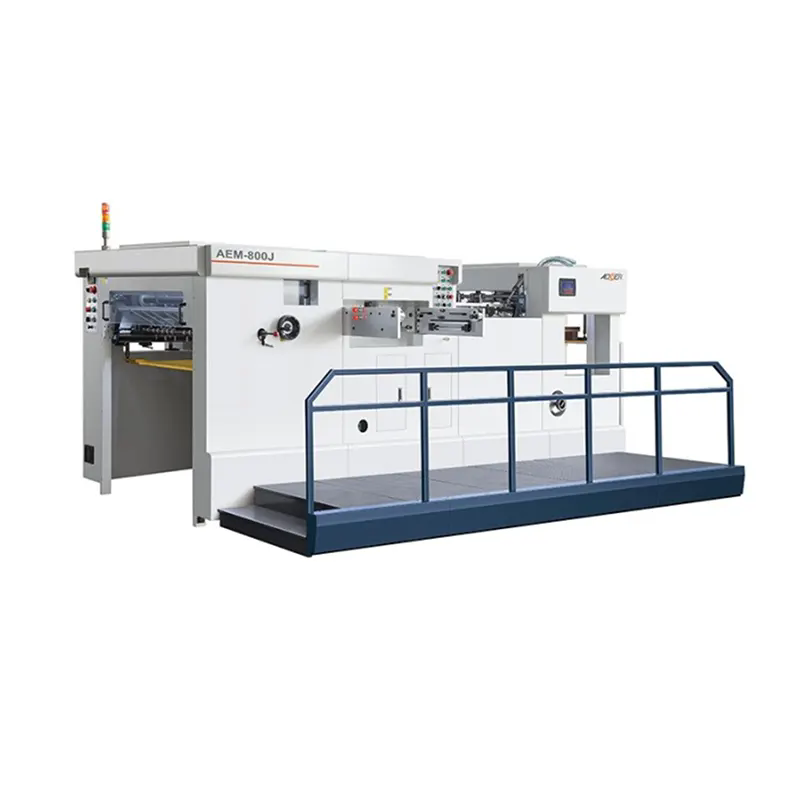
Table of Contents
- 1. What Is an Automatic Die Cutting Machine?
- 2. Why Precision and Repeatability Define Packaging Quality
- 3. How Automation Eliminates Manual Variability
- 4. What Technical Specifications Determine Die Cutting Performance?
- 5. How Does Efficiency Impact Packaging Production Economics?
- 6. Frequently Asked Questions (FAQ)
- 7. Conclusion
1. What Is an Automatic Die Cutting Machine?
An automatic die cutting machine is a piece of industrial equipment used to convert printed or unprinted sheet materials into finished packaging products. The machine performs three primary functions: cutting the outer shape of the product, creasing the fold lines, and, in some cases, embossing or debossing decorative features. The "automatic" designation distinguishes this type of machine from manual and semi-automatic die cutting presses, which require significant operator intervention for feeding, registration, and unloading. An automatic die cutting machine integrates all these functions into a continuous, high-speed process controlled by a programmable logic controller (PLC) and monitored by a series of sensors.
The core components of an automatic die cutting machine include:
- Feeder: A mechanism that separates individual sheets from a stack and feeds them into the machine at a controlled rate.
- Registration System: A series of sensors and mechanical guides that align each sheet precisely before it enters the die-cutting station. Modern machines use optical or camera-based registration systems for high-precision alignment.
- Die-Cutting Station: The heart of the machine, where a steel die (a flat or rotary tool with cutting and creasing rules) is pressed against the sheet to cut and crease it. The pressure is applied by a hydraulic or mechanical press.
- Stripping Station: A mechanism that removes the waste material (the "matrix") from the cut sheet. This is essential for clean, high-quality output.
- Delivery Station: A system that stacks the finished products neatly for transport to the next production stage.
The degree of automation in modern automatic die cutting machines is remarkable. The feeder can handle sheets of varying sizes and weights, adjusting its operation to the specific material. The registration system can detect and correct for minor misalignments, ensuring that the die cuts are in the correct position relative to the printed image. The die-cutting pressure is controlled to within a fraction of a ton, ensuring consistent cut quality across the entire sheet. At Wenzhou Feihua Printing Machinery Co., Ltd., our factory manufactures automatic die cutting machines that incorporate these advanced features, providing packaging manufacturers with the precision and reliability they need for high-quality production.
2. Why Precision and Repeatability Define Packaging Quality
The quality of a die-cut packaging product is defined by two key parameters: precision and repeatability. Precision refers to how accurately the die-cut features (the cut lines, creases, and embossing) match the intended design. Repeatability refers to how consistently the machine produces the same result over thousands of cycles. Both are critical for high-quality packaging. A lack of precision results in misaligned cuts and creases, which can cause problems in the folding and gluing stages of carton production. A lack of repeatability means that some products in a batch will be acceptable while others will not, leading to waste and rework.
The automatic die cutting machine excels at both precision and repeatability. The machine's rigid frame and precise die-mounting system ensure that the die is held in the correct position relative to the sheet. The registration system aligns each sheet to the die with an accuracy of +/- 0.1 mm or better. The pressure of the die-cutting press is controlled by a closed-loop hydraulic system, ensuring that the cutting force is consistent across the entire sheet and from sheet to sheet. This level of precision and repeatability is simply not achievable with manual or semi-automatic die cutting, where the operator's skill and physical condition can introduce significant variability.
The impact of precision and repeatability on packaging quality can be seen in several key areas:
- Folding and Gluing: Precise creasing is essential for clean, accurate folds. If the crease is misaligned or too shallow, the carton will not fold correctly, leading to gaps, misaligned panels, and a poor appearance. Repeatable creasing ensures that every carton in a production run folds and glues consistently.
- Print Registration: In packaging, the die-cut features must be accurately registered with the printed graphics. A misaligned cut can ruin the visual impact of the packaging and can also cut into the printed area, rendering the product unsaleable. The automatic die cutting machine's registration system ensures that the die cuts are always in the correct position relative to the print.
- Structural Integrity: The die-cutting process also determines the structural integrity of the packaging. Inconsistent cutting can weaken the carton, reducing its ability to protect the product during transport and storage. Precise and repeatable cutting ensures that every carton meets the required strength specifications.
- Aesthetic Quality: The visual appeal of the packaging is directly related to the quality of the die-cutting. Ragged edges, misaligned creases, and inconsistent embossing all detract from the product's perceived value. The automatic die cutting machine delivers the clean, precise edges and consistent creasing that define premium packaging.
At Wenzhou Feihua Printing Machinery Co., Ltd., we understand that precision and repeatability are the foundation of packaging quality. Our automatic die cutting machines are designed and manufactured to deliver these attributes consistently. We use high-precision machining and assembly processes, and every machine is subjected to rigorous testing before it leaves our factory.
3. How Automation Eliminates Manual Variability
One of the most significant advantages of the automatic die cutting machine is its ability to eliminate the variability inherent in manual and semi-automatic die cutting processes. In manual die cutting, the operator is responsible for feeding the sheets, aligning them with the die, and applying the cutting pressure. Each of these steps is a potential source of variability. The operator's skill, fatigue, and attention level can all affect the quality of the output. The result is a process that is inherently inconsistent, with a high rate of defects and a significant amount of rework.
The automatic die cutting machine eliminates this variability by transferring control from the operator to the machine. The machine's feeder, registration system, and die-cutting press operate in a precisely synchronized sequence, with each step controlled by the PLC. The operator's role is limited to setting up the machine, loading the feeder, and monitoring the output. The machine executes the die-cutting process with a level of consistency that is impossible to achieve manually. This has several important implications for packaging quality and production efficiency.
The following table illustrates the difference in variability between manual and automatic die cutting for key quality parameters:
| Quality Parameter | Manual Die Cutting | Automatic Die Cutting Machine |
| Cut Position Accuracy | +/- 0.5 mm | +/- 0.1 mm |
| Crease Depth Consistency | +/- 15% | +/- 3% |
| Edge Quality (Burr) | Frequent burrs | Clean, burr-free edges |
| Defect Rate | 5-10% | < 1% |
| Rework Rate | 8-15% | < 2% |
The data in this table is based on field studies conducted by our factory at Wenzhou Feihua Printing Machinery Co., Ltd. and our customers. It demonstrates the dramatic improvement in quality that can be achieved by switching from manual to automatic die cutting. The reduction in defect and rework rates has a direct impact on the cost of production, as well as on customer satisfaction. The automatic die cutting machine also reduces the risk of injury to operators, as the cutting process is fully enclosed and does not require manual handling of sharp dies or heavy sheets.
4. What Technical Specifications Determine Die Cutting Performance?
The performance of an automatic die cutting machine is determined by a set of technical specifications that define its capacity, precision, and efficiency. When selecting a machine, it is essential to understand these specifications and how they relate to the specific requirements of the packaging product being produced. The following are the key technical specifications for an automatic die cutting machine, with reference to the models manufactured by Wenzhou Feihua Printing Machinery Co., Ltd.
Maximum Sheet Size: This specification defines the largest sheet that the machine can handle. It is typically expressed in millimeters (length x width). The maximum sheet size determines the maximum size of the packaging product that can be produced.
Minimum Sheet Size: This is the smallest sheet the machine can handle. It is important for manufacturers who produce small cartons or labels.
Die-Cutting Pressure: The maximum pressure the machine can apply to the die, typically measured in tons. Higher pressure allows the machine to cut thicker and denser materials. The pressure is also a factor in the quality of the cut, as insufficient pressure can result in incomplete cuts.
Production Speed: The number of sheets the machine can process per hour. This is a critical factor for production efficiency. Modern automatic die cutting machines can process 5,000 to 7,000 sheets per hour, depending on the size and complexity of the die.
Registration Accuracy: The precision with which the machine aligns the sheet with the die. This is typically expressed as a tolerance, such as +/- 0.1 mm. Higher registration accuracy is essential for high-quality packaging.
Die-Cutting Accuracy: The precision of the cut itself. This is often expressed as a tolerance on the position of the cut line relative to the sheet edge. High die-cutting accuracy ensures that the finished product meets the design specifications.
The following table summarizes the key specifications for a typical automatic die cutting machine:
| Specification | Typical Value | Importance for Packaging Quality |
| Max Sheet Size | 1050 x 750 mm | Determines maximum product size |
| Min Sheet Size | 400 x 360 mm | Determines minimum product size |
| Max Die-Cutting Pressure | 300 tons | Allows cutting of thick and dense materials |
| Production Speed | 6,000 sheets/hour | Determines production capacity |
| Registration Accuracy | +/- 0.1 mm | Ensures precise alignment with printed image |
| Die-Cutting Accuracy | +/- 0.15 mm | Ensures product meets design specifications |
| Power Supply | 380V, 50Hz, 3-phase | Standard industrial power |
At Wenzhou Feihua Printing Machinery Co., Ltd., we manufacture automatic die cutting machines with a range of specifications to suit different production needs. Our machines are designed to deliver high precision, high speed, and reliable performance. We work closely with our customers to understand their specific requirements and to recommend the right machine for their application.
5. How Does Efficiency Impact Packaging Production Economics?
While quality is the primary driver for the adoption of automatic die cutting machines, the impact on production economics is also a significant factor. The packaging industry is highly competitive, and margins are often thin. The efficiency of the die-cutting process has a direct impact on the cost per unit of packaging. An automatic die cutting machine delivers efficiency gains in several key areas: labor cost, material utilization, and production speed. These gains can transform the economics of a packaging production operation.
Labor Cost Reduction: A manual die cutting operation requires multiple operators to feed the machine, align the sheets, and unload the finished products. An automatic die cutting machine requires only one operator to supervise the process. The reduction in labor costs can be substantial, particularly in regions with high labor costs. The automatic machine also reduces the physical strain on operators, leading to lower absenteeism and higher morale.
Material Utilization: The precision of the automatic die cutting machine allows for tighter nesting of the die-cut features on the sheet. This reduces the amount of waste material generated by the process. The machine's stripping station also efficiently removes the waste, allowing for easy recycling. The improvement in material utilization can be significant, especially for high-value substrates.
Production Speed: The automatic die cutting machine operates at a much higher speed than a manual or semi-automatic machine. The faster production rate enables manufacturers to increase output without increasing the number of machines or the size of the workforce. This increased capacity can be used to win new business or to reduce lead times for existing customers.
The following table provides an economic comparison of manual and automatic die cutting for a hypothetical packaging production operation:
| Metric | Manual Die Cutting | Automatic Die Cutting Machine |
| Labor per Shift | 4 operators | 1 operator |
| Output per Shift (sheets) | 1,500 | 6,000 |
| Labor Cost per 1,000 Sheets | $60 | $15 |
| Material Utilization | 85% | 92% |
| Defect Rate | 5% | 1% |
| Cost per 1,000 Sheets (Total) | $120 | $55 |
These figures illustrate the dramatic improvement in production economics that can be achieved with an automatic die cutting machine. The higher initial investment in the machine is rapidly recovered through lower labor costs, better material utilization, and higher output. At Wenzhou Feihua Printing Machinery Co., Ltd., we have helped numerous packaging manufacturers improve their competitiveness by upgrading to automatic die cutting technology.
6. Frequently Asked Questions (FAQ)
Question 1: What materials can be processed by an automatic die cutting machine?
Answer: An automatic die cutting machine can process a wide range of sheet materials, including paperboard, corrugated board, solid fiberboard, and specialty substrates such as laminated and coated boards. The maximum thickness and density of the material that can be cut depends on the die-cutting pressure of the machine. Our automatic die cutting machines are designed to handle the most common packaging materials.
Question 2: How does the machine maintain registration accuracy over long production runs?
Answer: Registration accuracy is maintained by a closed-loop control system. The registration system uses sensors to detect the position of each sheet relative to the die. If a deviation is detected, the control system automatically adjusts the sheet position before the die-cutting station. This real-time correction ensures that registration accuracy is maintained throughout the production run, even if there are slight variations in the sheet material or the machine's operating conditions.
Question 3: Can an automatic die cutting machine handle small batch sizes economically?
Answer: Yes, an automatic die cutting machine can handle small batch sizes economically, although the setup time for the die and the machine is a factor. For very small batch sizes, a semi-automatic machine may be more cost-effective. However, for most commercial packaging production, the automatic die cutting machine is the most economical choice, even for relatively small batches. The speed and precision of the machine make it efficient for both large and small production runs.
Question 4: What maintenance is required for an automatic die cutting machine?
Answer: An automatic die cutting machine requires regular maintenance to ensure optimal performance and longevity. Key maintenance tasks include lubricating the moving parts, checking and replacing worn die-cutting components, inspecting the registration sensors, and cleaning the feeder and delivery stations. The hydraulic system should also be checked regularly. Our factory provides a detailed maintenance schedule for each machine model.
Question 5: How does the machine handle different die configurations?
Answer: The automatic die cutting machine is designed to accommodate a wide range of die configurations. The die is mounted in a die frame, which is then secured in the machine's die-cutting station. The machine's control system allows the operator to set the appropriate pressure and speed for the specific die. Changing from one die to another typically takes a few minutes, allowing for efficient production changeovers.
7. Conclusion
The automatic die cutting machine is a critical component in the production of high-quality packaging products. Its ability to deliver precision, repeatability, and efficiency sets it apart from manual and semi-automatic alternatives. The machine's precision ensures that every cut and crease meets the design specifications, while its repeatability ensures that this quality is maintained across thousands of production cycles. The efficiency gains in labor, material utilization, and production speed translate directly into improved production economics, making the automatic die cutting machine a sound investment for any packaging manufacturer.
At Wenzhou Feihua Printing Machinery Co., Ltd., we are dedicated to providing our customers with the highest quality automatic die cutting machines and comprehensive technical support. Our machines are designed to meet the demanding requirements of the packaging industry, delivering the precision and reliability that our customers need to produce world-class packaging products. We invite you to contact us to learn more about our products and how they can enhance your packaging production.
Contact Wenzhou Feihua Printing Machinery Co., Ltd. today to discuss your packaging production requirements and discover how our automatic die cutting machines can elevate your product quality.