
- English
- Español
- Português
- русский
- Français
- 日本語
- Deutsch
- tiếng Việt
- Italiano
- Nederlands
- ภาษาไทย
- Polski
- 한국어
- Svenska
- magyar
- Malay
- বাংলা ভাষার
- Dansk
- Suomi
- हिन्दी
- Pilipino
- Türkçe
- Gaeilge
- العربية
- Indonesia
- Norsk
- تمل
- český
- ελληνικά
- український
- Javanese
- فارسی
- தமிழ்
- తెలుగు
- नेपाली
- Burmese
- български
- ລາວ
- Latine
- Қазақша
- Euskal
- Azərbaycan
- Slovenský jazyk
- Македонски
- Lietuvos
- Eesti Keel
- Română
- Slovenski
- मराठी
- Srpski језик

Why Is an Automatic Flat-bed Die Cutting Machine Essential for High-Precision Packaging Manufacturing
Choosing the right Automatic Flat-bed Die Cutting Machine is one of the most important decisions for modern packaging manufacturers seeking precision, productivity, and long-term profitability. NEW STAR provides advanced die cutting solutions designed to process paperboard, corrugated board, laminated sheets, and specialty packaging materials with exceptional cutting accuracy, stable performance, and intelligent automation for demanding production environments.
An Automatic Flat-bed Die Cutting Machine has become a critical piece of equipment in today's printing and packaging industry. As packaging designs become increasingly sophisticated and customers demand higher quality standards, manufacturers require machines capable of delivering consistent cutting accuracy, higher production efficiency, reduced material waste, and lower operating costs. This guide explores how flat-bed die cutting technology works, its major advantages, technical specifications, application industries, purchasing considerations, maintenance tips, and frequently asked questions to help buyers make informed investment decisions.
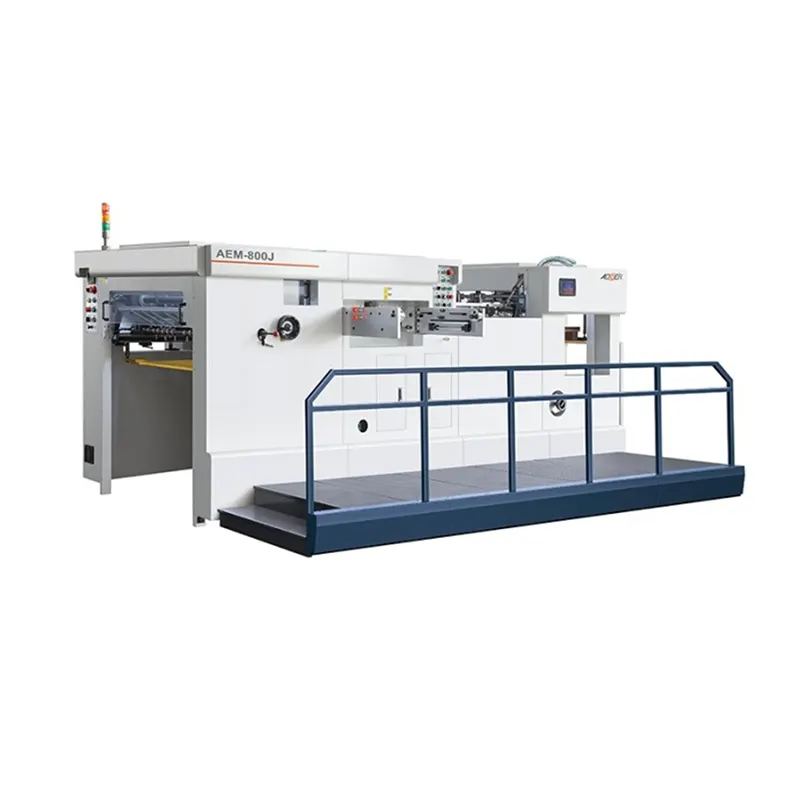
Table of Contents
- What Is an Automatic Flat-bed Die Cutting Machine?
- How Does It Work?
- Key Advantages
- Typical Technical Specifications
- Major Industrial Applications
- Important Features to Consider
- Maintenance Best Practices
- Automatic vs Semi-Automatic Machines
- Frequently Asked Questions
- Final Thoughts
What Is an Automatic Flat-bed Die Cutting Machine?
An Automatic Flat-bed Die Cutting Machine is a highly efficient converting system designed to cut, crease, emboss, and strip printed sheets into finished packaging products with outstanding precision. Unlike rotary die cutters that use cylindrical dies, flat-bed machines employ a stationary cutting die and a reciprocating platen, producing exceptional cutting force and dimensional accuracy for complex package structures.
The technology is widely used in commercial printing, folding carton production, pharmaceutical packaging, food packaging, luxury gift boxes, cosmetic packaging, electronics cartons, and many other industries where high-quality finishing is essential.
Modern automatic models integrate several intelligent functions into one production line, including:
- Automatic sheet feeding
- Precise registration alignment
- High-pressure die cutting
- Creasing and embossing
- Automatic waste stripping
- Finished sheet collection
- PLC intelligent control system
- Touchscreen operation interface
By combining multiple production steps into one automated workflow, manufacturers can significantly reduce labor requirements while maintaining exceptional product consistency throughout long production runs.
How Does It Work?
The operating principle of an Automatic Flat-bed Die Cutting Machine is relatively straightforward yet highly precise. Printed sheets are automatically fed into the machine through a feeder system. Grippers transport each sheet accurately to the die cutting station where tremendous pressure is applied between the cutting die and the platen.
The customized steel rule die cuts, creases, perforates, or embosses the material according to the package design. After cutting, the waste stripping unit removes unnecessary material automatically before the finished sheet is delivered to the collection section.
Because every movement is synchronized by servo motors and intelligent controllers, modern systems can maintain extremely stable production even during continuous high-speed operation.
Typical Production Workflow
- Automatic sheet feeding
- Sheet alignment and positioning
- Die cutting operation
- Creasing and embossing
- Waste stripping
- Finished sheet delivery
- Stack collection
This integrated workflow greatly improves production efficiency while minimizing human intervention and reducing production errors.
Key Advantages of an Automatic Flat-bed Die Cutting Machine
1. Outstanding Cutting Precision
One of the biggest advantages of flat-bed die cutting technology is its exceptional cutting accuracy. High-precision guide rails, rigid machine frames, and advanced pressure control systems ensure every sheet is cut exactly according to design specifications.
This precision is especially important for premium packaging products that require accurate folding lines, clean edges, and perfect registration with printed graphics.
2. Higher Production Efficiency
Automation significantly reduces manual handling throughout the production process. Automatic feeding, intelligent positioning, and continuous operation allow manufacturers to increase production capacity while reducing labor costs.
Compared with manual or semi-automatic equipment, automatic flat-bed die cutting machines can achieve substantially higher daily output with greater consistency.
3. Excellent Material Compatibility
These machines are capable of processing a wide range of substrates, including:
- Paperboard
- Corrugated cardboard
- Duplex board
- Laminated paper
- Art paper
- Kraft paper
- Plastic sheets
- PVC materials
- PET films
- Special packaging materials
This flexibility enables manufacturers to expand their product offerings without investing in multiple specialized machines.
4. Stable Long-Term Performance
Industrial-grade machine frames, precision bearings, servo-driven motion systems, and intelligent lubrication systems contribute to reliable operation during extended production cycles. Stable performance not only improves productivity but also reduces maintenance frequency and downtime.
Typical Technical Specifications
Although exact configurations vary depending on production requirements, most industrial Automatic Flat-bed Die Cutting Machines offer specifications similar to those shown below.
| Parameter | Typical Value |
|---|---|
| Maximum Sheet Size | Approximately 1060 × 760 mm |
| Minimum Sheet Size | Approximately 400 × 350 mm |
| Maximum Cutting Pressure | Up to 300 tons |
| Maximum Production Speed | Up to 7,500 sheets/hour |
| Material Thickness | Paperboard, Corrugated Board, Laminated Sheets |
| Registration Accuracy | ±0.1 mm |
| Automation Level | Fully Automatic |
| Control System | PLC + Touch Screen Interface |
Major Industrial Applications
An Automatic Flat-bed Die Cutting Machine is widely used across numerous industries because of its ability to produce accurate, repeatable, and clean die-cut products at high speeds. From standard commercial cartons to premium luxury packaging, one machine can support diverse manufacturing requirements while maintaining excellent production consistency.
As consumer expectations continue to rise, manufacturers are increasingly investing in automated die cutting equipment to improve production efficiency, reduce labor costs, and ensure consistent product quality. The flexibility of flat-bed die cutting technology allows companies to respond quickly to customized orders and short production cycles without sacrificing precision.
Main Industries Served
- Food and beverage packaging
- Pharmaceutical cartons
- Cosmetic packaging
- Electronics packaging
- Luxury gift boxes
- Wine and spirits boxes
- E-commerce packaging
- Corrugated shipping cartons
- Greeting cards and stationery
- Book covers and educational materials
- Retail display stands
- Labels and specialty printed products
Whether producing millions of folding cartons or customized promotional packaging, automatic flat-bed die cutting technology delivers the flexibility modern manufacturers require.
Important Features to Consider Before Purchasing
Selecting the right machine involves more than comparing production speed. Buyers should carefully evaluate equipment performance, automation level, maintenance requirements, future scalability, and overall return on investment.
Machine Frame Strength
A heavy-duty cast frame minimizes vibration during high-speed operation and provides the rigidity necessary for maintaining cutting precision over many years of continuous production.
High-Precision Feeding System
Reliable sheet feeding is essential for stable production. Advanced automatic feeders ensure each sheet enters the machine accurately, reducing registration errors and minimizing material waste.
Servo Motion Control
Modern servo-driven systems improve positioning accuracy while reducing mechanical wear. They also provide smoother motion, quieter operation, and greater energy efficiency than conventional drive systems.
Intelligent PLC Control
User-friendly touchscreen interfaces simplify operation by allowing operators to monitor machine status, adjust production parameters, diagnose faults, and store production recipes for future jobs.
Quick Die Change System
Fast die replacement significantly reduces setup time, enabling manufacturers to handle multiple short-run orders more efficiently while improving machine utilization.
Automatic Waste Stripping
Integrated stripping units remove excess material automatically, improving production efficiency and reducing manual finishing work after die cutting.
Safety Protection
Industrial safety systems such as emergency stop buttons, overload protection, safety sensors, and protective covers help ensure operator safety while minimizing unexpected downtime.
Maintenance Best Practices
Routine maintenance is essential for maximizing machine lifespan and ensuring long-term production accuracy. Even the most advanced Automatic Flat-bed Die Cutting Machine benefits from regular inspection and preventive maintenance.
Recommended Maintenance Checklist
- Inspect cutting dies before each production shift.
- Lubricate moving components according to the manufacturer's schedule.
- Keep feeding and delivery systems clean.
- Check gripper chains regularly for proper tension.
- Monitor hydraulic or pneumatic pressure.
- Verify registration accuracy before large production runs.
- Inspect electrical wiring and PLC connections periodically.
- Replace worn bearings and consumable components promptly.
- Clean dust and paper debris from sensors.
- Calibrate pressure settings whenever changing material thickness.
Preventive maintenance not only reduces repair costs but also helps maintain consistent product quality throughout the machine's service life.
Automatic vs Semi-Automatic Flat-bed Die Cutting Machines
Understanding the differences between automatic and semi-automatic models helps manufacturers choose equipment that best fits their production goals and investment budget.
| Feature | Automatic Machine | Semi-Automatic Machine |
|---|---|---|
| Feeding | Fully Automatic | Manual Assistance Required |
| Labor Requirement | Low | Higher |
| Production Speed | High | Medium |
| Production Consistency | Excellent | Operator Dependent |
| Material Waste | Lower | Higher |
| Suitable Production Volume | Large Scale Manufacturing | Small and Medium Orders |
| Return on Investment | Higher for Continuous Production | Suitable for Limited Budgets |
For manufacturers processing large daily volumes or supplying demanding industries such as pharmaceuticals, cosmetics, and premium packaging, fully automatic equipment typically offers greater long-term value through improved efficiency, reduced labor costs, and more consistent product quality.
Frequently Asked Questions
1. What materials can an Automatic Flat-bed Die Cutting Machine process?
Most industrial models are designed to handle a wide variety of materials, including paperboard, corrugated cardboard, kraft paper, coated paper, laminated sheets, PVC, PET, and other specialty packaging substrates. The exact material range depends on the machine configuration and cutting pressure.
2. How does an automatic machine improve production efficiency?
Automatic sheet feeding, intelligent registration, high-speed die cutting, waste stripping, and automatic delivery significantly reduce manual intervention. This enables manufacturers to achieve higher output, lower labor costs, and more consistent product quality throughout long production runs.
3. Is an Automatic Flat-bed Die Cutting Machine suitable for customized packaging?
Yes. Modern flat-bed die cutting technology is ideal for producing customized packaging designs with intricate cutting patterns, embossing, creasing, and perforation. Quick die change systems also make short production runs more economical.
4. What factors should buyers consider before purchasing?
Key considerations include maximum sheet size, cutting pressure, production speed, registration accuracy, automation level, compatibility with packaging materials, energy efficiency, maintenance requirements, after-sales support, and future production expansion plans.
5. How often should maintenance be performed?
Basic cleaning and inspection should be carried out daily, while lubrication, calibration, and component inspections should follow the manufacturer's maintenance schedule. Preventive maintenance helps maximize machine lifespan, reduce downtime, and maintain cutting precision.
Final Thoughts
As packaging quality standards continue to evolve, investing in an Automatic Flat-bed Die Cutting Machine is becoming an increasingly strategic decision for manufacturers seeking higher productivity, superior precision, and sustainable business growth. From folding cartons and corrugated packaging to luxury gift boxes and specialty printed products, automated die cutting technology delivers the reliability and flexibility needed to stay competitive in today's fast-changing market.
Choosing an experienced manufacturing partner is equally important. With advanced engineering, intelligent automation, and a strong commitment to product quality, NEW STAR provides professional die cutting solutions designed to meet the needs of modern packaging production. Whether you are upgrading an existing production line or planning a new packaging facility, our technical team can help you identify the most suitable equipment configuration for your application.
Ready to Improve Your Packaging Production?
If you are looking for a reliable, high-performance Automatic Flat-bed Die Cutting Machine that combines precision, efficiency, and long-term durability, NEW STAR is ready to support your business with customized solutions and professional technical expertise.
Whether you need assistance selecting the right model, comparing machine configurations, or requesting a quotation, our experienced specialists are here to help. Contact us today to discuss your production requirements, receive personalized recommendations, and discover how our advanced die cutting technology can maximize your manufacturing efficiency and business profitability.